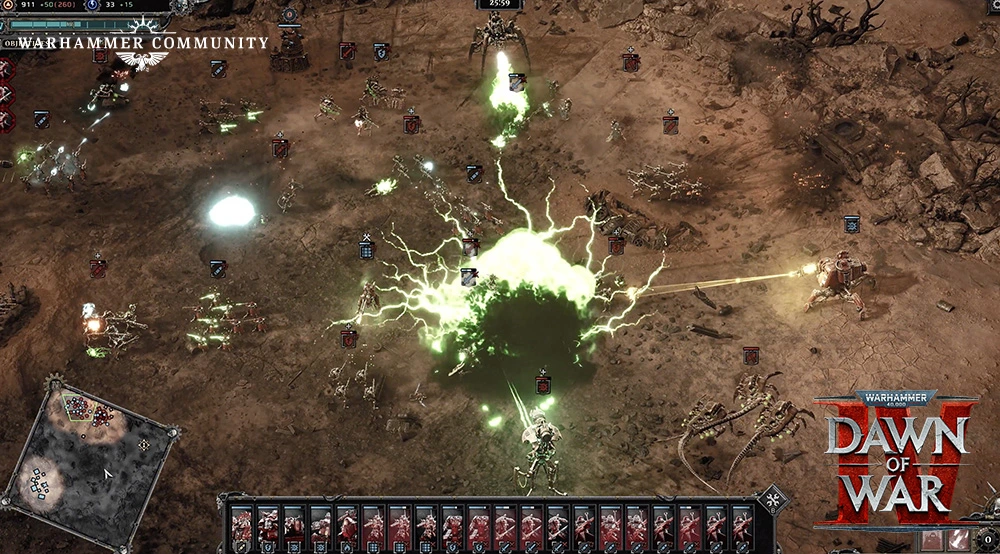
Dawn of War IV Beginner Guide
Updated 2026-11-26 · Applies to: Launch build (pre-release footage)
Dawn of War IV returns the series to classic base-building RTS. Whether you are new to the genre or coming back from older Dawn of War games, this guide covers the fundamentals that decide matches: resources, map control, unit preservation and faction identity.
1. Understand the Resources
Most factions run on Requisition and Power. Requisition flows from captured points on the map, while Power comes from nodes and generators you build and upgrade. The Necrons are the exception: they generate a single resource, Dominion, by expanding their Power Matrix across the battlefield.
- Capture points early — map control is income.
- Upgrade captured points (for example Space Marine Auspex Shrines or Necron Protocol Relays) to multiply their value.
- Watch the upkeep tax: the bigger your army, the more it drains your requisition income and slows production. There is no hard early population cap, so the tax is the real limit.
- Research is free — it only costs time. Weapon upgrades and squad reinforcements still cost resources.
2. Preserve Your Units
Squads gain Veterancy as they fight, improving their health and damage and unlocking new weapons and abilities at higher levels. A veteran squad is worth far more than a fresh one, so the single most important habit in Dawn of War IV is keeping units alive:
- Reinforce damaged squads in the field instead of replacing them — and use the right-click auto-reinforce toggle so you never forget.
- Retreat losing fights. The retreat can be cancelled while the icon is yellow if the situation suddenly improves.
- Each faction has its own preservation tools: Space Marines heal and reinforce through the Thunderhawk Relay, while Necrons can reconstitute fallen units in Resurrection Galleries (though revived units lose their Veterancy).
3. Use Cover — and Know Who Cannot
Cover is directional: sandbags, barricades, craters and garrisonable buildings all protect units firing from behind them. Flamers and grenades negate cover, and melee forces units out of it. Critically, the Necrons cannot use cover at all — their resilience comes from the Power Matrix instead. Other factions should exploit this when fighting them.
4. Learn Your Faction's Identity
| Faction | Identity | Core mechanic |
|---|---|---|
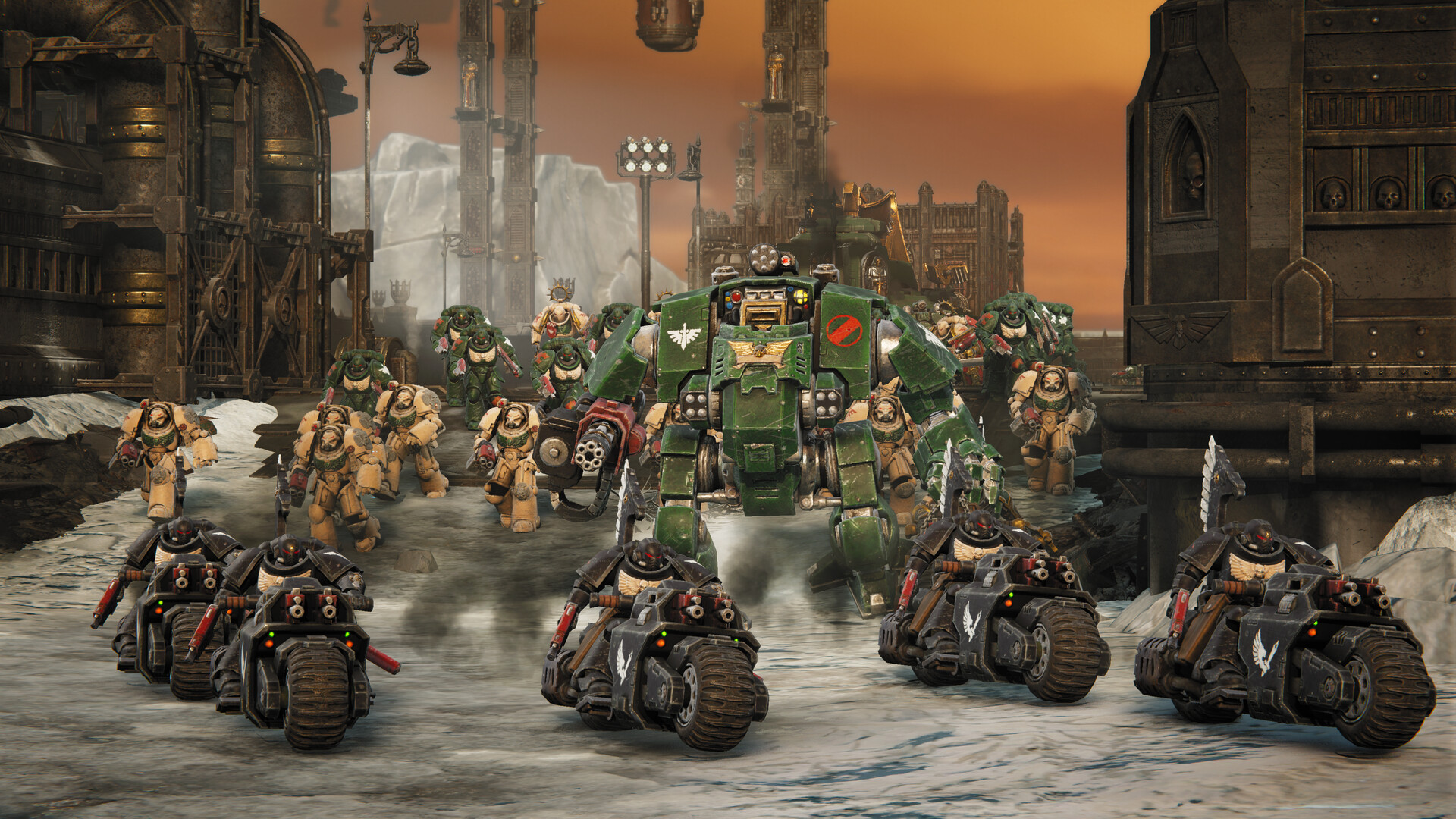
| Space Marines | Small, elite, expensive army | Drop Pod reserves, Thunderhawk Relay, Armor of Contempt overshield |
| Orks | Cheap, fast, endless numbers | Waaagh! meter — army-wide berserker buff; free Boyz at max level |
| Necrons | Slow, relentless, unkillable | Power Matrix generates Dominion; resurrection; teleportation |
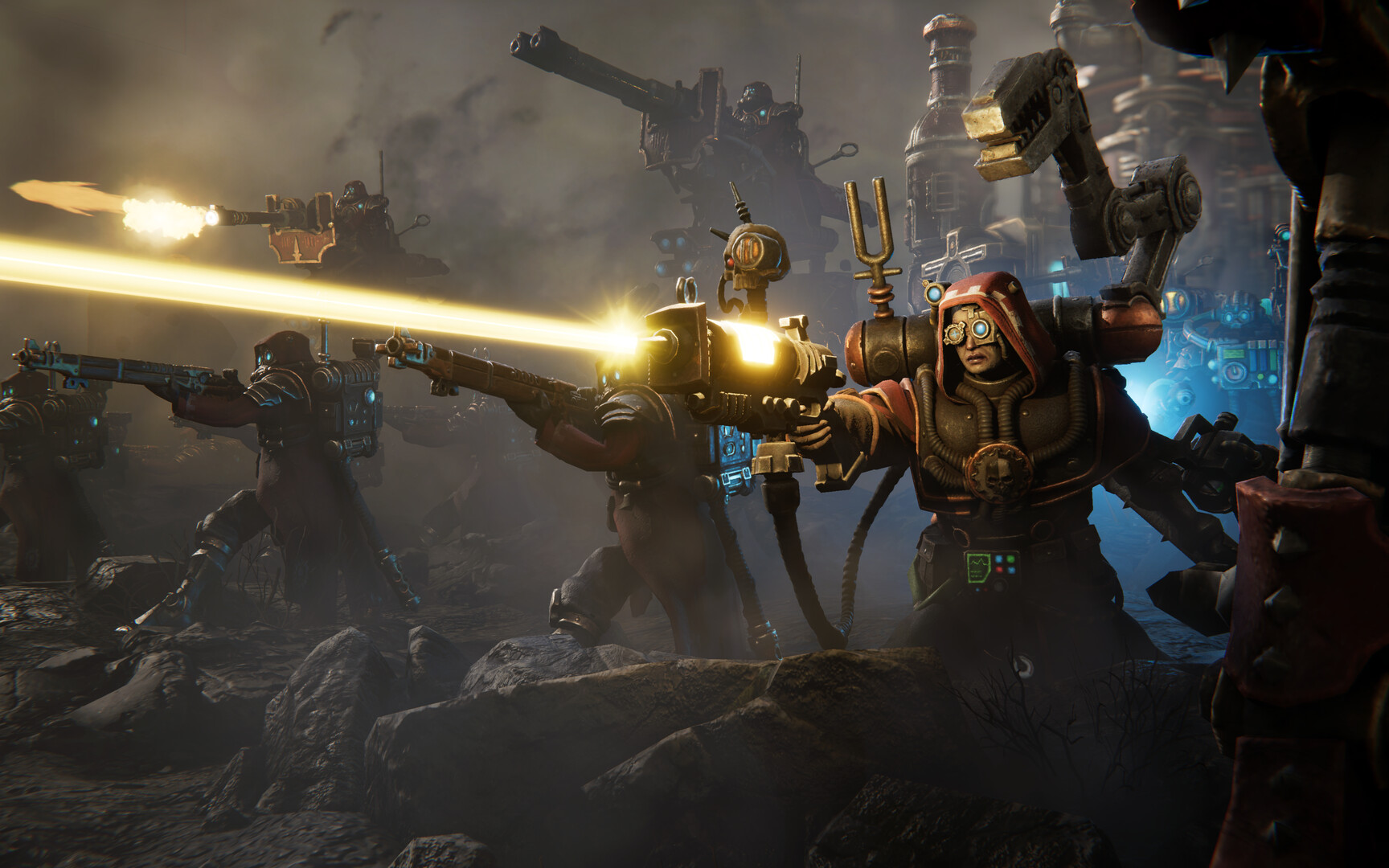
| Adeptus Mechanicus | Fast, long-ranged, networked | Noosphere Network levels; Auger Vision; Void Shield |
5. Win the First Five Minutes
Openings matter. Every faction has a distinct first-five-minutes plan — see our faction build orders for step-by-step openings:
6. Handy Controls and Combat Tips
- Multi-attack dragbox: hold right-click and drag over enemies — your units auto-assign targets intelligently.
- Commander abilities (Stratagems) win fights. Learn your Commander's global and use it on cooldown.
- Battles are deliberately watchable: the developers raised time-to-kill so you can read fights — use that time to reposition instead of walking away.
- The Combat Director stitches together melee animations on the fly. Units that look locked in a duel usually are — do not waste orders spam-clicking them.
Next steps
Pick a faction, learn its opening from our build orders, then study the unit database and commander pages to plan your army.